Honoring the Best of Consulting Engineering since 1989.

Project | 2026 Winner | 2026 Bridges
2026 Lieutenant Governor’s Award
2026 Award of Excellence
The Tank Hill Project – BC Highway Reinstatement Program
Owner: BC Ministry of Transportation and Transit | Near the Village of Lytton, BC
About the Project
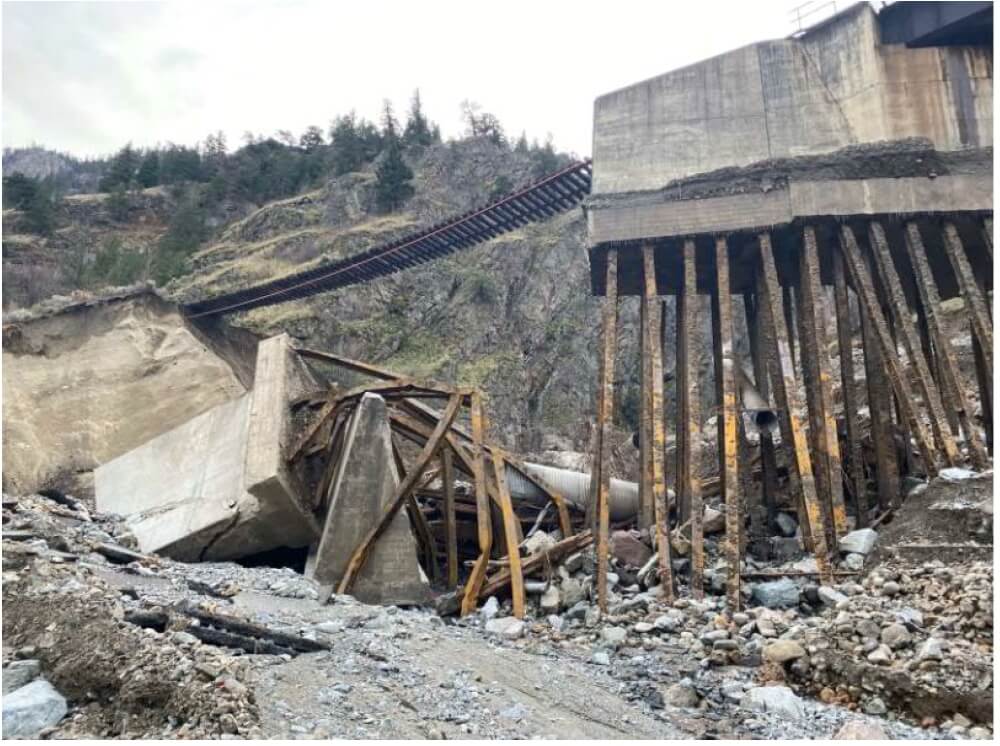
A catastrophic atmospheric river in November 2021 destroyed both rail and road infrastructure at the Tank Hill Rail Underpass on Highway 1 near Lytton, severing two of B.C.’s primary transportation corridors. While temporary works restored traffic within weeks, a permanent grade-separated solution was urgently required.
The Tank Hill Alliance, comprising the Ministry of Transportation and Transit, Associated Engineering, McElhanney Engineering Services, and Ledcor, was established to deliver a long-term solution. Guided by an integrated Alliance delivery model and “Best for Project, Best for Community” philosophy, the team rebuilt the corridor within an exceptionally constrained mountainous environment bounded by steep terrain, unstable glacial deposits, the Thompson River, and an active CPKC mainline. Under an accelerated schedule, design and construction were completed within 37 months and significantly under budget.
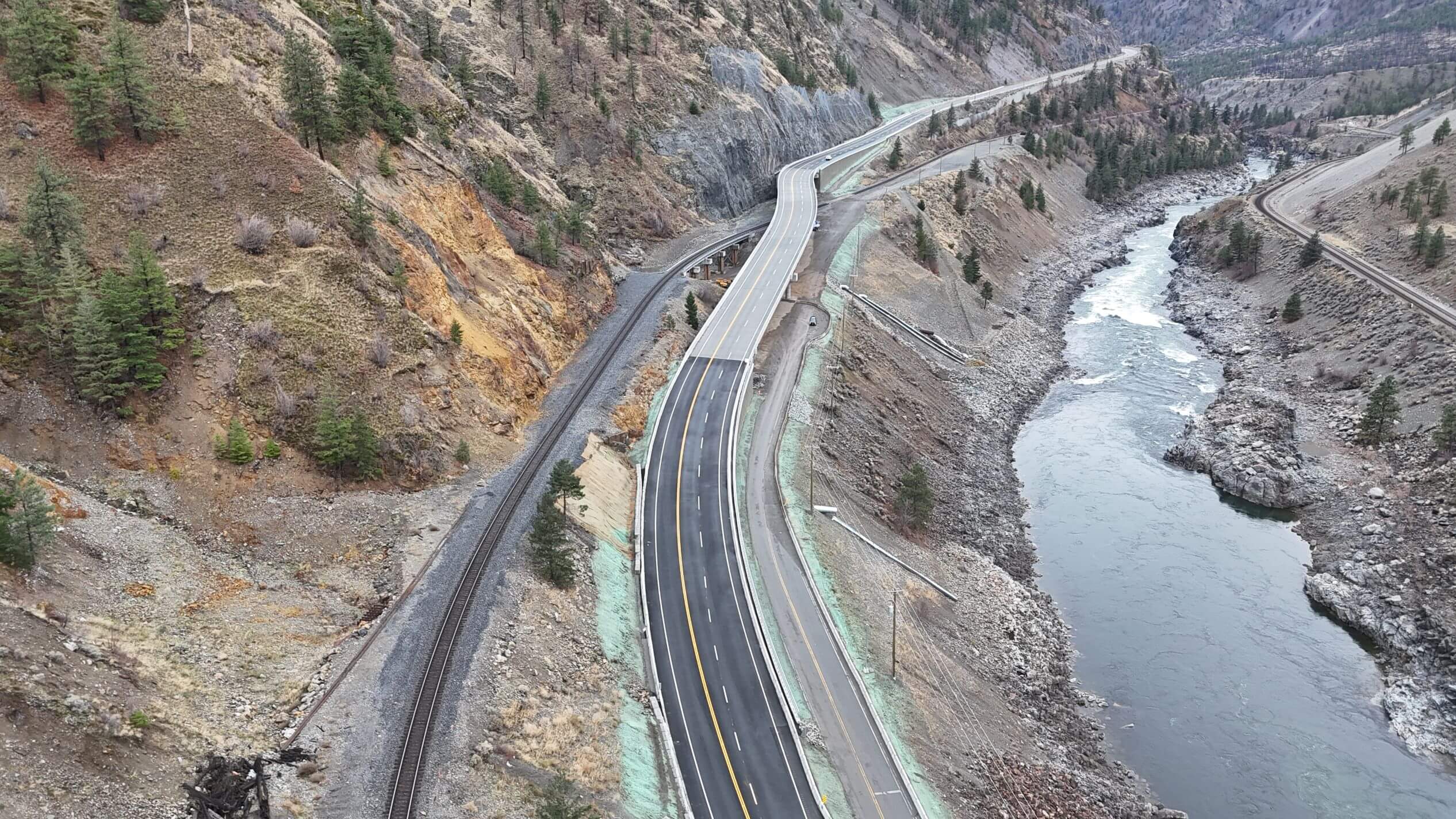
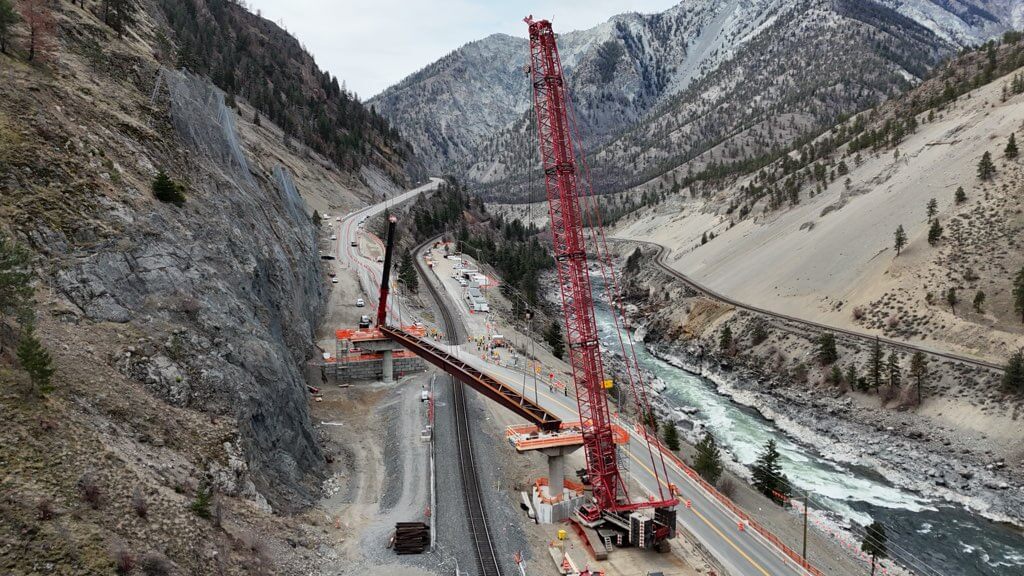
The project involved realigning a three-lane section of Highway 1 over the railway and creek channel via a 279-metre structural viaduct with a 24-degree skew. The design incorporated variable-depth steel girders, unique pier configurations, and extensive mechanically stabilized earth walls and rockfall protection systems to manage geotechnical risks. The new crossing is capable of withstanding full structural loads, even under maximum erosion scenarios, supporting long-term resilience amid future extreme weather events.
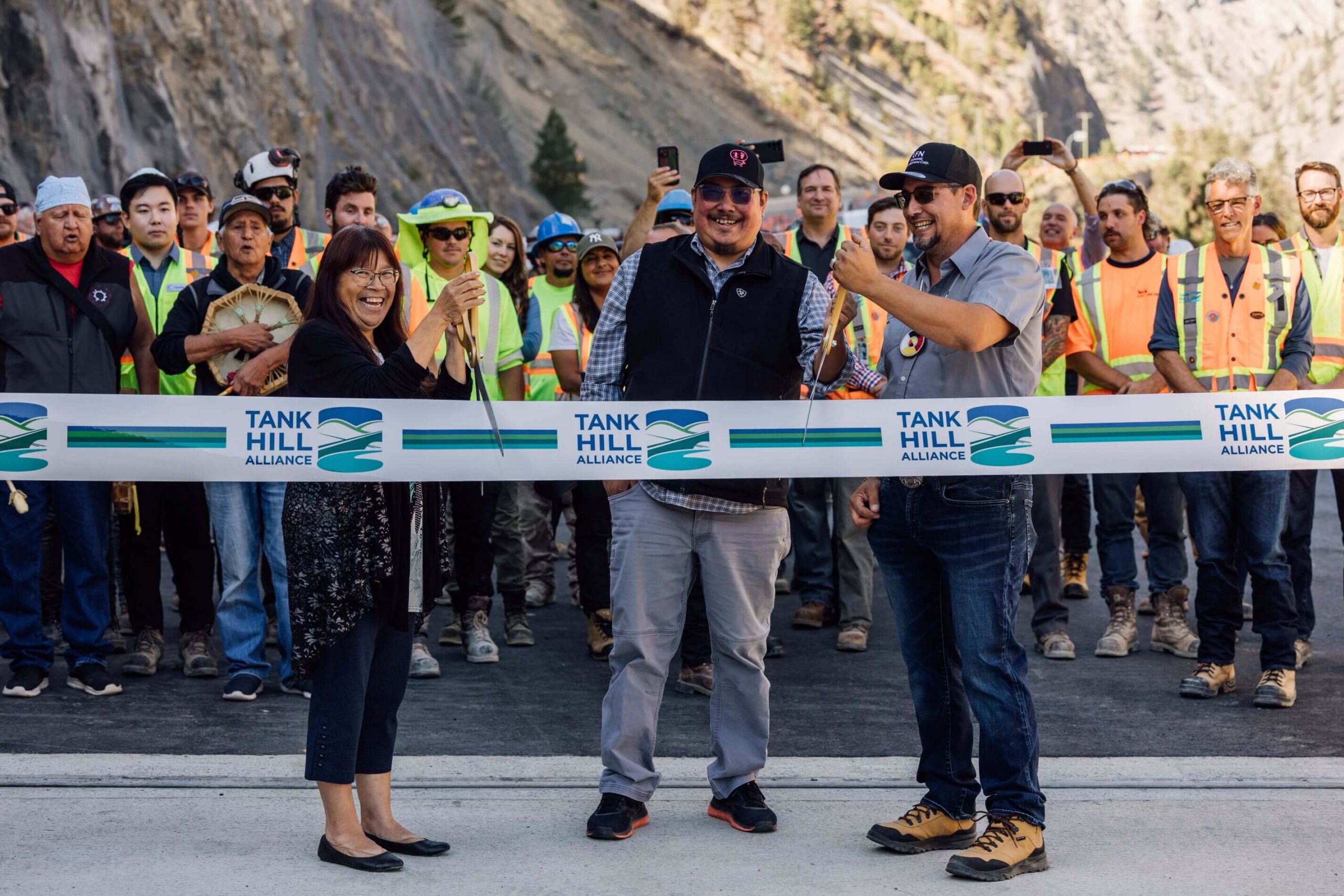
Extensive benefits were delivered through employment, training, cultural engagement, and contributions to local communities. Indigenous participation was fundamental, with significant work subcontracted to Indigenous businesses, cultural monitors integrated into the project, and all project personnel completing cultural awareness training.
Tank Hill stands as a benchmark for infrastructure delivery, demonstrating how collaborative leadership and technical innovation can transform a disaster site into a sustainable public asset.
Approach
The Tank Hill project was delivered through a highly collaborative Alliance model that united the Ministry of Transportation and Transit, engineering partners, constructors, and local Indigenous communities under shared goals, transparency, and “Best for Project” decision-making. The model removed traditional contractual barriers, enabling rapid consensus, streamlined coordination with CPKC, and strong community relationships.
Technical excellence underpinned every stage. The team overcame extreme geometric, geotechnical, and operational constraints by evaluating 16 alignment options, optimizing the highway profile with custom variable-depth girders, and designing complex foundations across highly variable ground conditions. Carefully planned construction sequencing combined with multi-stage traffic detours enabled live highway traffic and uninterrupted rail operations. Innovative engineering reduced environmental impacts, improved constructability, and future-proofed the crossing for climate-driven events.
Indigenous participation was evident throughout the project, including engagement with Elders and Cultural Monitors and the selection of Indigenous-owned businesses during construction. Additional legacies include improvements to the local playground and baseball diamonds, as well as workforce skills development. The project team fostered respectful, collaborative relationships through consistent engagement, cultural awareness initiatives, and community involvement.
Results
The Tank Hill project restored two primary transportation arteries in one of British Columbia’s most constrained and high-risk corridors. Through collaborative delivery, technical innovation, and climate-adaptive engineering, the project was completed under an accelerated schedule, exceeding targets across financial, social, and operational metrics. The overall success of the Alliance model has established a new benchmark for partnership-driven infrastructure delivery in British Columbia.
Service(s) Provided
- Bridge Engineering
- Highway Engineering
- Geotechnical Engineering
- Rock Hazard Mitigation
- Hydrological Resilience Design
- Stormwater Management
- Climate Change – Adaptation
- Retaining Wall Design
- Traffic Management and Detour
- Third-Party Utility Relocation
- Environmental Mitigation
- Road Safety Audit
- CPKC Design-Construction Coordination
- Construction Services
Project Team (Consultants)
Thurber Engineering Ltd.
DMD & Associates Electrical Consultants Ltd.
BGC Engineering Inc.
G. Ho Engineering Consultants Ltd.
Project Team (Contractors)
Western Highway Infrastructure (Ledcor Group of Companies)
Go back to projects in
View other projects from